

If someone has a leaking roof, damaged tiles, a blocked gutter or an urgent roofing problem, they usually don’t want to spend hours searching through dozens of companies.
They want a roofer who can help.
For many people, the first place they look is Google. They might search for “roofer near me”, “roof repair Birmingham”, “emergency roofer Leeds” or “flat roof repair Manchester”.
If your roofing company appears when those searches happen, you have an opportunity to turn that search into a phone call, enquiry or site visit.
That’s where SEO for Roofers comes in. But there’s an important question many roofing business owners ask before getting started:
How much does SEO cost in the UK?
The answer depends on the size of your business, the areas you serve, the competition, the condition of your website and how much work is required. SEO isn’t a fixed one-off service like replacing a broken roof tile. It’s an ongoing process that can range from relatively small monthly work for a local roofing business to a much larger investment for companies targeting several competitive areas. This guide explains what roofing SEO involves, what affects the cost and, more importantly, what you’re actually paying for.
What Is SEO for Roofers?
SEO stands for Search Engine Optimisation.
For a roofing company, SEO means improving your website and online presence so that people can find your business through relevant searches on Google and other search engines.
It’s not simply about putting the word “roofer” on your website as many times as possible. A proper roofing SEO strategy might involve:
- Improving your roofing service pages
- Targeting relevant local searches
- Optimising your Google Business Profile
- Improving your website’s mobile experience
- Making pages faster and easier to use
- Building relevant local citations
- Earning useful backlinks
- Creating helpful roofing content
- Improving internal links
- Fixing technical SEO problems
- Monitoring search visibility and enquiries
There’s also an important difference between general SEO and local SEO. General SEO can target searches from people across a wider area. Local SEO for Roofers focuses more heavily on searches connected to a particular town, city or service area.
Why SEO Matters for UK Roofing Companies
Roofing is a local service. If someone in Bristol needs a roof repair, a roofing company in Newcastle isn’t particularly useful to them. This makes local search visibility especially valuable. A well-planned SEO strategy can help a roofing business:
- Become more visible in Google search results
- Reach people searching for roofing services locally
- Generate website enquiries
- Encourage phone calls
- Build trust before the first conversation
- Attract relevant organic traffic over time
- Reduce dependence on paid advertising alone
There’s also a difference between someone researching roofing generally and someone who needs a roofer today. Someone searching for “how to clean roof tiles” may simply be looking for information. Someone searching for “emergency roofer near me” has a much stronger commercial reason to contact a business. Good SEO considers that difference. The objective isn’t simply to increase the number of visitors to your website. It’s to attract people whose search suggests that they actually need your services.
Local SEO for Roofers
Local SEO is particularly important for roofing companies because most roofing work is geographically limited. A roofing business might serve one city, several nearby towns or a wider region. Your SEO strategy should reflect the areas you genuinely serve.
Useful searches might include:
- roofer near me
- roof repair near me
- roofers in Birmingham
- roof repair Birmingham
- emergency roofer Leeds
- flat roof repair Manchester
- roof replacement Bristol
- roofing contractor Nottingham
You don’t necessarily need a separate page for every one of these phrases.
- What services you provide
- Where you provide them
- Who you work with
- What types of roofing you specialise in
- How customers can contact you
This gives Google useful information while also helping potential customers understand whether you’re the right business for them.
Google Business Profile for Roofers
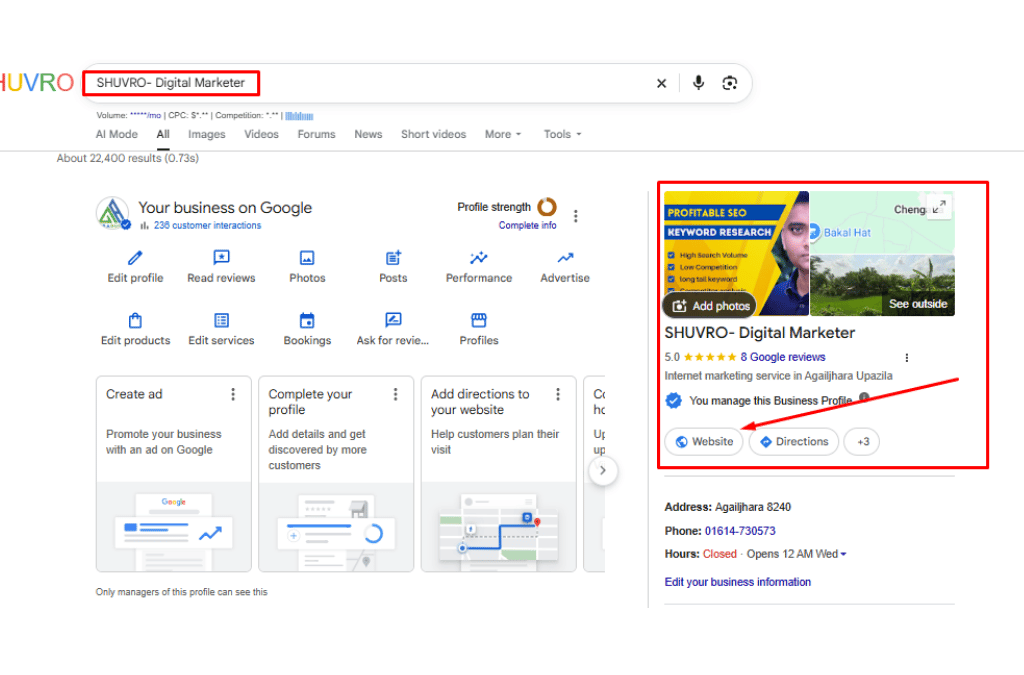
For a local roofing company, a well-maintained Google Business Profile can help potential customers find your business in Google Search and Maps. Keep your profile accurate, complete and consistent. Focus on these areas:
Business Information
Check that your business name, phone number, website and other details are correct.
Primary Category
Choose the category that best matches your roofing business. Only add additional categories that are genuinely relevant.
Services
List the roofing services you actually provide, such as:
- Roof repairs
- Roof replacement
- Flat roofing
- Emergency roofing
- Gutter repairs
- Chimney repairs
Business Description
Briefly explain what your company does and the areas you serve. Keep it natural rather than filling it with keywords.
Photos
Add genuine photos of completed roofing work, your team, vehicles and projects. Real images can help potential customers understand your services.
Reviews
Encourage genuine customers to leave honest reviews after completing a job. Respond to reviews professionally, including negative feedback.
Service Areas
Only list areas you genuinely serve. Adding lots of nearby towns simply to target more searches can make your profile less accurate.
A complete and regularly maintained profile can support your wider Local SEO for Roofers strategy.
Google Maps SEO for Roofers
When people search locally, Google may show a map and a selection of local businesses. This is often called the local pack. Google Maps SEO for Roofers involves improving the signals that help Google understand your business and its relevance to local searches. Google’s local results can be influenced by factors including:
- Relevance to the search
- Distance
- Business information
- Reviews
- Prominence
- The overall strength of the business’s local presence
There isn’t one trick that guarantees a top position. For example, adding dozens of keywords to a Google Business Profile doesn’t automatically put a roofing company above its competitors. A stronger approach is to build a consistent local presence across the business’s website, Google Business Profile, citations, reviews and other relevant online references.
Keyword Research for Roofing Businesses
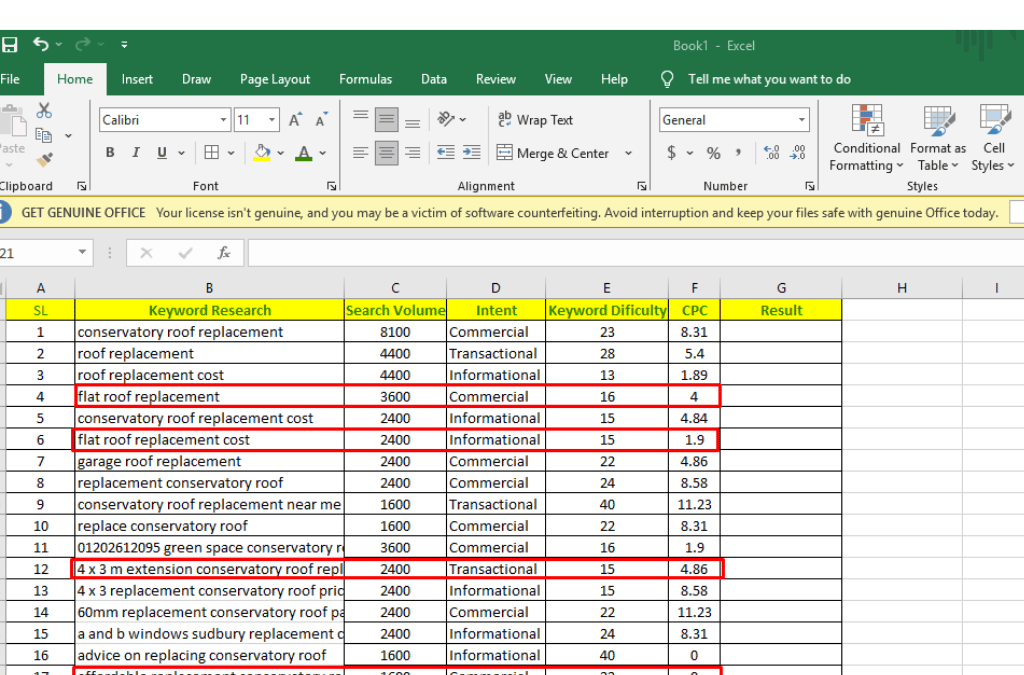
Keyword research helps you understand what potential customers are searching for. For a roofing company, useful topics might include:
| Roofing service | Example search |
|---|---|
| Roof repair | roof repair Birmingham |
| Roof replacement | roof replacement Leeds |
| Emergency roofing | emergency roofer near me |
| Flat roofing | flat roof repair Manchester |
| New roofs | new roof installation Bristol |
| Gutters | gutter repair Birmingham |
| Chimneys | chimney repair Leeds |
| Inspections | roof inspection near me |
Don’t choose keywords based only on search volume. Search intent matters. For example, “types of roof tiles” and “roof replacement near me” are very different searches. The first may be informational. The second indicates someone may be looking for a roofing company.
For most small roofing businesses, commercial and local service searches deserve particular attention because they are more closely connected to enquiries.
Local On-Page SEO for Roofers
Your website needs to make it easy for both Google and potential customers to understand what you offer. This is where Local On-Page SEO for Roofers becomes important.
Page titles
Each important page should have a useful, descriptive title.
Example:
Roof Repair Birmingham | [Business Name]
Meta descriptions
Your meta description should accurately explain the page and encourage relevant users to click. It doesn’t need to be stuffed with keywords.
H1 headings
Each main page should have a clear primary heading.
Roof Repair Services in Birmingham
H2 headings
Use H2 headings to organise the information on the page. You might have:
Common Roof Problems We Repair, Our Roof Repair Process , Emergency Roof Repairs
Service pages
Give important services their own pages where there is enough useful information to justify them.
Location information
Explain where you actually provide services.
Internal linking
Link related pages together naturally. For example, a roof repair page could link to your emergency roofing service and flat roof repair page where relevant.
Contact information
Don’t make people search for your phone number. A clear contact section should be easy to find, particularly on mobile. A click-to-call button can also be useful for people browsing from their phones.
Roofing Service Pages That Can Generate Enquiries
A common problem with small business websites is putting everything onto one generic “Services” page.A roofing company might provide:
- Roof repairs
- Roof replacements
- Emergency roofing
- Flat roof repairs
- New roof installations
- Gutter repairs
- Chimney repairs
If all of this information is placed on one short page, there may be less opportunity to provide useful, specific information about each service. Individual service pages can make sense when each page offers genuine value. For example, a Roof Repair page could explain common problems, the types of repairs offered, the areas covered, what customers should do during an active leak and how to request an inspection. The same principle applies to emergency roofing and flat roof repairs. The pages shouldn’t exist simply to target different keywords. They should exist because customers genuinely need the information.
Location Pages for Roofing Companies
Location pages can be useful when a roofing company genuinely serves multiple areas. For example, a company based in Birmingham might serve Birmingham, Solihull, Sutton Coldfield and nearby areas. A useful location page could explain:
- The services available in that area
- Areas or neighbourhoods served
- Common local roofing requirements
- How customers can arrange an inspection
- Relevant examples of work
- Useful local information
What you should avoid is creating 50 pages that are almost identical except for the town name.
“Roofers Birmingham, Roofers Coventry, Roofers Leicester, Roofers Nottingham”
If the content is basically the same on every page, you’re not creating much value for the reader. Location pages should provide genuinely useful local information.
Reviews and Reputation
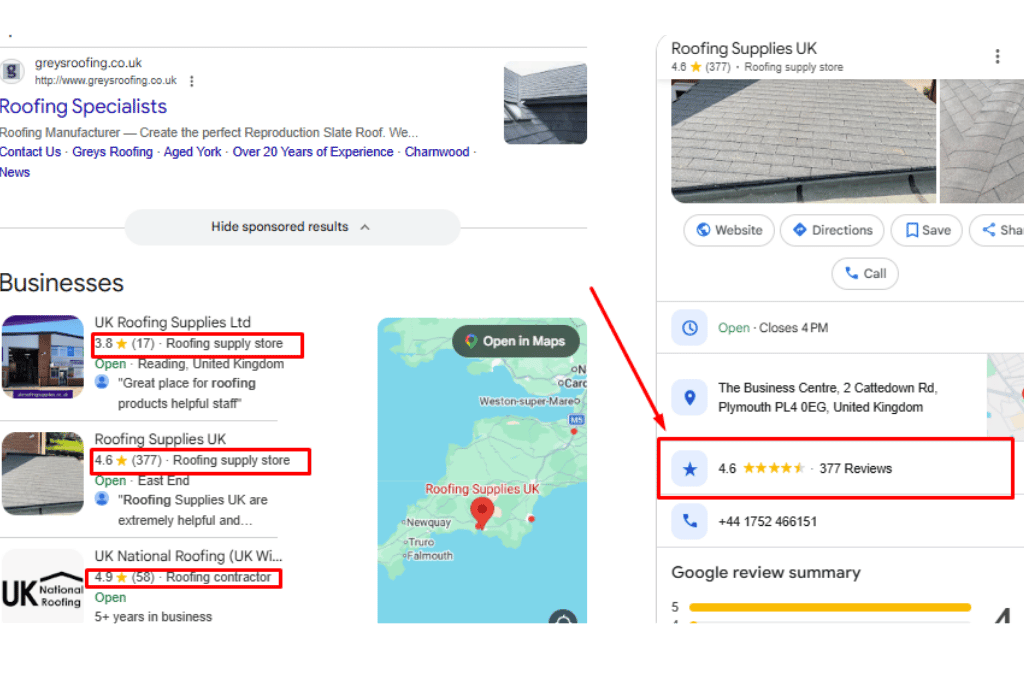
Reviews can help potential customers feel more comfortable contacting a roofing company. Roofing work can involve significant costs, so people often want evidence that a business is reliable before making contact. Ask genuine customers for honest reviews after completing work.
You can also respond professionally to reviews.
Avoid:
- Buying fake reviews
- Creating fake customer accounts
- Asking people to leave reviews for work they didn’t receive
- Writing reviews for your own business
A large number of artificial reviews isn’t a substitute for a good reputation. Over time, genuine customer feedback can support both trust and your wider local search presence.
Off-Page SEO for Roofers
Off-Page SEO for Roofers is mainly about signals and references that exist outside your own website. One of the best-known examples is a backlink. A backlink is a link from another website to your website. For a local roofing company, relevant sources might include:
- UK business directories
- Local directories
- Trade organisations
- Local community websites
- Industry publications
- Local organisations
- Genuine business partnerships
- Sponsorship pages
Quality matters more than collecting hundreds of random links.
“A relevant local business directory can make more sense than a low-quality website that exists mainly to sell links.” “Local citations can also help establish consistent business information across the web.” “The aim should be to build a natural online presence rather than manufacture large numbers of links.”
Technical SEO for Roofing Websites
You don’t need to understand technical SEO in detail to recognise why it matters. Your website needs to be accessible to both people and search engines. Important areas include:
Mobile usability
A large proportion of local searches happen on mobile devices. Your phone number, navigation and enquiry options should work properly on a smaller screen.
Website speed
Slow pages can create a poor user experience. Large images, unnecessary scripts and poorly configured websites can all contribute to slower loading.
Content Marketing for Roofers
Roofing companies have plenty of useful topics they can write about. The best subjects are usually connected to questions customers actually ask.
- How much does roof repair cost?
- How long does a roof normally last?
- What are the signs that a roof needs repair?
- Should I repair or replace my roof?
- What should I do if my roof starts leaking?
- How often should gutters be cleaned?
- How long does a roof replacement take?
- What happens during a roof inspection?
- What should I do after storm damage?
This type of content can attract people earlier in the buying process. Someone researching roof damage today may need a roofer next week. The important thing is to avoid writing articles purely because a keyword exists. Answer a real question properly.
How Much Does SEO for Roofers Cost in the UK?

There isn’t one standard price for SEO. The cost depends on what needs to be done and how competitive the target market is. A small roofing company serving one town may require a very different SEO campaign from a roofing contractor targeting multiple cities across the UK.
| SEO approach | What it may involve |
|---|---|
| One-off SEO audit | Website and SEO issues identified with recommendations |
| Basic monthly SEO | On-page improvements, local SEO and monitoring |
| Local SEO campaign | Google Business Profile, citations, reviews, local pages and ongoing optimisation |
| Full SEO campaign | Technical SEO, content, local SEO, link building and ongoing analysis |
UK SEO providers can charge anything from relatively modest monthly fees to several thousand pounds per month, depending on the scope and level of competition.
How Long Does SEO for Roofers Take?
A roofing company in a smaller market with an established website and strong local presence may have a very different starting point from a new business in a highly competitive city.
Results can be affected by:
- Local competition
- Location
- Website condition
- Existing domain authority
- Google Business Profile quality
- Reviews
- Existing content
- Relevant backlinks
- Previous SEO work
- Technical problems
- The quality of the strategy
Some improvements can happen relatively quickly, particularly when obvious technical or on-page problems are corrected. Other improvements take longer because Google needs time to crawl, process and reassess changes. SEO should therefore be treated as an ongoing process rather than a quick advertising campaign.
How to Measure SEO Results
Rankings are useful, but they’re not the final business objective. A roofing company should look at whether SEO is producing useful business activity.
- Organic traffic
- Google search impressions
- Search clicks
- Keyword visibility
- Local search visibility
- Google Business Profile interactions
- Phone calls
- Contact form enquiries
- Quote requests
- Leads
- Conversions
Now imagine the website receives fewer visitors, but those visitors include people searching for roof repairs in the areas the company serves. The second situation may be much more relevant to the business. SEO should ultimately connect search visibility with real customer demand.
SEO Mistakes That Can Hold Your Roofing Business Back
SEO doesn’t usually fail because a roofer hasn’t used enough keywords. More often, it’s the small things that are overlooked or done the wrong way. Here are some common problems worth checking on your website and local presence.
1. Trying to Force Keywords Everywhere
Using phrases such as “roofer Birmingham” repeatedly can make a page difficult to read. Instead, mention your services and location naturally and focus on giving visitors useful information.
2. Creating Location Pages Just for SEO
Having a page for every nearby town isn’t automatically a good strategy.
If each page contains almost identical content with only the location changed, those pages are unlikely to offer much value. Create location pages where you can provide genuinely useful local information.
3. Building Backlinks Without Thinking About Quality
More backlinks don’t necessarily mean better SEO. Links from irrelevant, low-quality or spammy websites aren’t a sensible replacement for relevant links from genuine industry, local or business sources.
4. Treating Google Business Profile as an Afterthought
Your website isn’t the only part of your local SEO presence. An incomplete or poorly maintained Google Business Profile can leave important information missing when potential customers are searching for roofing services. Keep your services, contact details, photos, reviews and other business information up to date.
5. Forgetting About Mobile Visitors
A potential customer might find your roofing business while standing outside looking at a damaged roof or dealing with a leak. If the website loads slowly, is difficult to navigate or makes the phone number hard to find, they may simply move on to another roofer.
6. Giving Every Page the Same Title
Your roof repair page shouldn’t have exactly the same title as your gutter repair or emergency roofing page. Give each important page a clear title that tells Google and visitors what that particular page is about.
7. Making Customers Search for Your Phone Number
Don’t make someone click through several pages just to find out how to contact you. Keep your phone number and enquiry options easy to find, particularly on mobile. A clear call button can be especially useful for local service businesses.
8. Letting Reviews Sit Unanswered
Reviews are part of how people judge a local business before making contact. Ask genuine customers for honest feedback and take the time to respond professionally. Don’t buy reviews or create artificial ones.
9. Writing Articles Just to Add More Pages
A roofing website doesn’t need hundreds of articles that nobody wants to read. Before publishing something, ask:
“Would a potential customer actually search for this or find it useful?”
Topics such as roof repair costs, signs of roof damage and repair versus replacement are usually more useful than content created simply to include another keyword.
10. Expecting Google Rankings to Change Overnight
SEO takes time. Some improvements can produce noticeable changes relatively quickly, while others may take months to develop. The level of competition, website condition, local authority and previous SEO work all play a part.
A Simple SEO Plan for a UK Roofing Business
If you’re starting from scratch, you don’t need to tackle everything at once.
Step 1: Audit the website
Check technical issues, page structure, content, mobile usability, speed, indexing and existing search visibility. A proper website audit can help identify which problems should be addressed first.
Step 2: Research relevant roofing keywords
Find the services and locations that are actually relevant to your business. Focus on search intent rather than chasing search volume alone.
Step 3: Optimise core service pages
Create useful pages for important services such as roof repair, roof replacement, emergency roofing and flat roof repair.
Step 4: Improve your Google Business Profile
Check your business information, category, services, photos, reviews and service areas.
Step 5: Build genuine local citations
Make sure your business details are accurate and consistent across relevant directories and websites.
Step 6: Create useful roofing content
Answer real questions customers ask before hiring a roofer.
Step 7: Earn relevant backlinks
Look for legitimate opportunities through industry websites, local organisations, partnerships and other relevant sources.
Step 8: Monitor traffic, rankings and enquiries
Track what is changing rather than relying on assumptions.
Step 9: Improve based on the data
SEO shouldn’t be a set-and-forget activity. If a page isn’t attracting relevant searches, review it. If one service is generating strong enquiries, make sure the supporting content and internal links are working properly.
Final Thoughts
Good SEO for Roofers isn’t simply about getting more people to visit a website. It’s about helping the right people find the right roofing company when they actually need roofing services.
That could be someone searching for an emergency roofer after discovering a leak, a homeowner comparing roof replacement options or a landlord looking for a reliable contractor to repair a property.
For a UK roofing business, local SEO, Google Business Profile optimisation, useful service pages, technical SEO, genuine reviews and relevant local authority can all play a part.
And when it comes to the cost of SEO, there isn’t a single figure that works for every roofer. The right budget depends on the market you’re targeting and the amount of work your website and local presence actually need.
If you’re unsure where to start, a practical SEO audit can be useful. Grabuild provides SEO audit services designed to identify the areas that may be limiting a website’s search visibility, so a roofing business can see what needs attention before deciding what to do next.
You can also explore Grabuild’s Small Business SEO UK, Local SEO Services UK, Free SEO Audit and SEO Tools resources for more practical guidance.
Frequently Asked Questions
What is SEO for roofers?
SEO for roofers is the process of improving a roofing company’s website and online presence so potential customers can find the business through relevant Google searches. It can include local SEO, technical SEO, content, Google Business Profile optimisation, on-page SEO, citations and backlinks.
How does local SEO help roofing companies?
Local SEO helps roofing businesses improve their visibility for searches connected to their services and locations. This can include searches such as “roof repair near me”, “roofer in Birmingham” and “emergency roofer Leeds”.
How can roofers rank on Google Maps?
Google Maps visibility can be influenced by factors such as relevance, distance, prominence, business information, reviews and the overall local presence of the company. Keeping your Google Business Profile accurate and building a genuine local presence can support your local SEO strategy, but no single tactic guarantees a particular position.
How long does roofing SEO take?
It varies from business to business. Competition, location, website quality, existing authority, content, reviews, backlinks and previous SEO work can all affect the timeframe. Some technical and on-page improvements may show changes relatively quickly, while broader organic growth can take considerably longer.
How much does SEO for roofers cost in the UK?
SEO pricing varies considerably. A small local roofing business may need a relatively simple local SEO campaign, while a company targeting several competitive cities may require a much larger ongoing campaign. The best way to assess cost is to look at the actual work included rather than comparing monthly prices alone.
Is Google Business Profile important for roofers?
Yes, it can be an important part of local search visibility. A complete and accurate profile gives Google and potential customers useful information about the business, its services and where it operates. Genuine reviews and regularly maintained business information can also contribute to a stronger local presence.
What keywords should roofing companies target?
Roofing companies should target keywords that match their actual services and locations. Examples include “roof repair”, “roof replacement”, “emergency roofer”, “flat roof repair”, “new roof installation”, “gutter repair” and “chimney repair”, combined with relevant location terms where appropriate. Search intent should be considered alongside search volume.
Can a small roofing company compete with larger companies on Google?
A small roofing company can build search visibility by focusing on relevant services, genuine local areas, a useful website, Google Business Profile optimisation, customer reviews, helpful content and a trustworthy local presence. Larger competitors may have more resources, but local SEO allows smaller businesses to focus on the searches and areas that are most relevant to their own customers.
MORE POST:
[…] A plumber serving Leeds, for example, has very different local search opportunities from a plumber serving Bristol. Your SEO strategy should reflect the areas you genuinely serve rather than trying to target every UK town. For another example of how local SEO can be applied to a trade business, see our guide to Local SEO for Roofers. […]
[…] build its topical relevance through useful roofing content and appropriate industry references. Our Local SEO for roofers guide covers the subject in more […]